
Pharmaceutical Aluminum Foil Guide: From PTP to Cold Forming – Specifications
2026-03-11
Medicine packaging might look simple, but there"s more to it than meets the eye. Most tablets and capsules we take are protected by aluminum foil. Thanks to its excellent barrier properties, non-toxic nature, and light-blocking ability, aluminum foil has become a go-to material in pharmaceutical packaging.
However, not all pharmaceutical foils are the same. Depending on the drug"s characteristics and the packaging method, different types of foil are used. The most common ones include PTP foil (the kind you push tablets through), cold-forming foil (for high-barrier blister packs), and tropical foil (a reinforced version for hot and humid climates). Today, let"s focus on cold-forming foil—the material that puts a "suit of armor" around sensitive medicines.
Common Alloy Grades
Pharmaceutical aluminum foil substrates typically come from a few standard alloys, each with slightly different features:
1235: Higher purity, good ductility. Often used for PTP foil that requires printing and coating, especially on the forming web.
8011: The most common workhorse alloy. It is widely used in PTP foil and as a layer in cold-forming laminates. It offers good moisture resistance at a reasonable cost.
8021 & 8079: These are the main players for cold-forming foil. With higher strength and fewer pinholes, they are ideal for deep-drawn cold-form blisters, providing strong protection for moisture and oxygen-sensitive drugs.
8011: The most common workhorse alloy. It is widely used in PTP foil and as a layer in cold-forming laminates. It offers good moisture resistance at a reasonable cost.
8021 & 8079: These are the main players for cold-forming foil. With higher strength and fewer pinholes, they are ideal for deep-drawn cold-form blisters, providing strong protection for moisture and oxygen-sensitive drugs.
You"ll also see O temper (soft) and H18 (full hard). O temper is essential for cold forming because softness allows deep drawing without cracking. H18 is often used for PTP foil to ensure stiffness and easy tearing.
Choosing Specifications: Thickness, Width, and Applications
Pharmaceutical foil comes in a wide range of specifications, depending on your machine requirements and final packaging needs.
-
Thickness: Ranges from as thin as 0.01mm up to 0.08mm.
Around 0.02mm: Commonly used for PTP lidding foil (the sealing layer). It requires minimal pinholes and good heat-seal strength.
0.04–0.065mm: The mainstream thickness for cold-forming foil substrates, balancing barrier performance and formability.
Above 0.07mm: Often used for tropical foil or special deep-draw packaging where extra strength is needed.
-
Width: Typically customized to match the user"s slitting or laminating equipment, ranging from 100mm to 1600mm. It"s wise to confirm the exact width before ordering to avoid waste.
A Closer Look at Cold-Forming Foil
Why are some medicines packaged specifically with cold-forming foil? The answer lies in the inherent properties of aluminum itself.
Aluminum provides an almost complete barrier against water vapor, oxygen, and light. Certain medications are highly sensitive—they may be hygroscopic (moisture-absorbing), prone to oxidation, or decompose when exposed to light. Standard plastic blisters might compromise their efficacy over time, especially in humid or high-temperature environments. Cold-forming aluminum foil acts like an impermeable suit of armor, significantly extending the shelf life of drugs.
In practice, cold-forming foil is used for high-barrier blister packaging—think antibiotics, cardiovascular drugs, or imported medications that are moisture-sensitive. It has a multilayer structure, typically PA (Nylon) / Aluminum / PVC. The aluminum core is usually 8021 or 8079, with a thickness ranging from 0.045mm to 0.06mm. This structure is formed at room temperature using mechanical pressure, without heat, making it gentler on the medicine itself.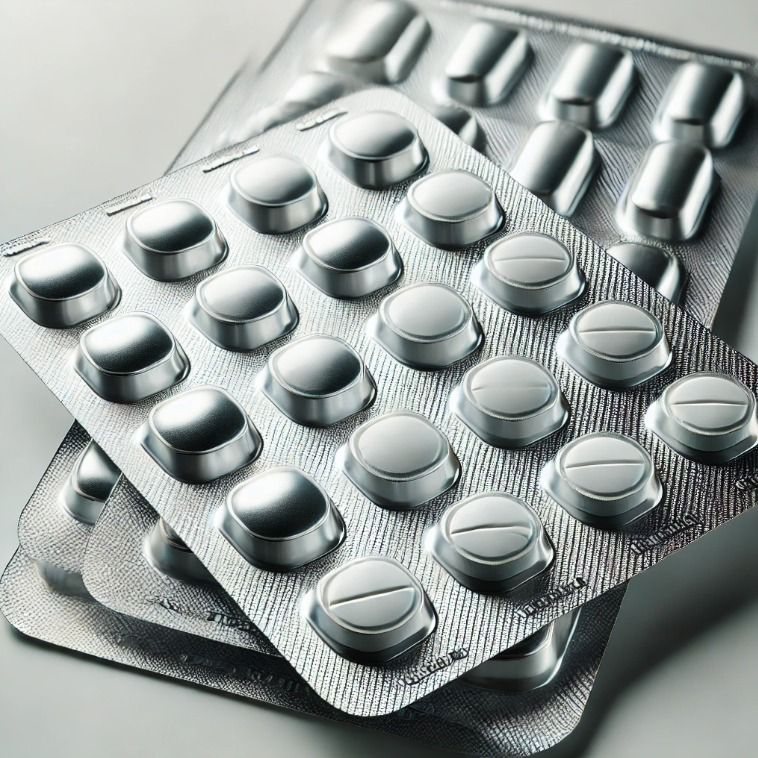
We hope this overview helps you navigate the world of pharmaceutical aluminum foil. If you"re looking for materials, a good starting point is the common alloys like 8011 (for PTP) or 8021/8079 (for cold forming), paired with your required thickness range.
Previous Page:
Next Page:
Share:
.jpg)