
Food-Grade Aluminum Foil
2026-01-07
You’ll find a roll of shiny aluminum foil in almost every kitchen. It quietly helps us preserve food and makes cooking easier. But you might not have thought much about this thin metal film—it’s specially designed to be in contact with what we eat, and we call it “food-grade aluminum foil.”
First, what is it made of? Much of the food foil on the market uses 8011 alloy. This alloy gives the foil good ductility while ensuring it’s safe and non-toxic, meeting strict standards for food contact materials. You don’t need to worry about harmful substances; it’s made ready to wrap your food safely.
The foil feels soft and pliable in your hands, easy to wrap and mold. This is mainly thanks to its “O temper” (also called “annealed” temper). Through this heat treatment process, the aluminum becomes soft and highly flexible, allowing it to conform tightly to foods or containers of any shape, providing a better seal. In contrast, “H temper” foil is stiffer, but for everyday home use, the soft O temper is what we encounter most often.
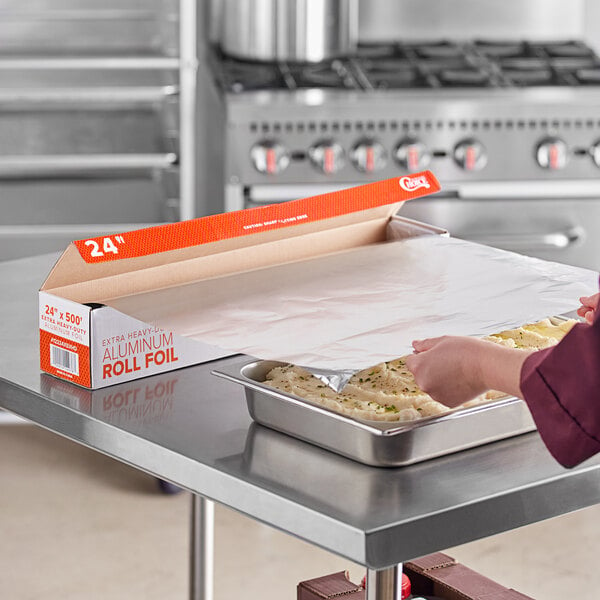
When it comes to thickness, aluminum foil is often measured in microns. Different thicknesses suit different needs:
-
Foil around 10 microns is very thin and lightweight. It’s often used for inner wraps for chocolates, candies, or snug packaging. It’s economical and good for items without sharp edges.
-
25 microns (about 0.025mm) is probably one of the most common ranges for household use. This thickness balances flexibility and sufficient strength. It’s suitable for everyday oven baking, wrapping leftovers for freshness, or covering vegetables and meats during grilling—it’s less likely to tear easily.
-
Foil that is 30 microns or thicker is more robust and durable. It’s better for tasks requiring longer heat retention or more complex wrapping, such as larger food packaging in catering, takeaway insulation, or some industrial food processing.
In summary, when choosing food-grade aluminum foil, think about what you need it for. For home food preservation and general baking, foil around 25 microns in O temper is a versatile all-rounder. For commercial uses like catering packaging or specific food products, the right thickness should be considered based on the food’s properties (like oil content, acidity, shape, or whether it needs steaming).
As a manufacturer of food-grade aluminum foil, we focus on supplying reliable raw materials in the form of master jumbo rolls to downstream converters for precision slitting. Understanding the diversity of market needs, we also offer custom slitting services to produce finished rolls in specified widths and diameters, catering to applications ranging from large-scale food processing to customized packaging solutions.
.png)
Previous Page:
Next Page:
Share:
.jpg)